How to style a bedroom: build a calm, cohesive scheme
Style a bedroom that feels calm and finished: pick a palette, layer the bed and lighting, hang art at the right height and fix common mistakes.
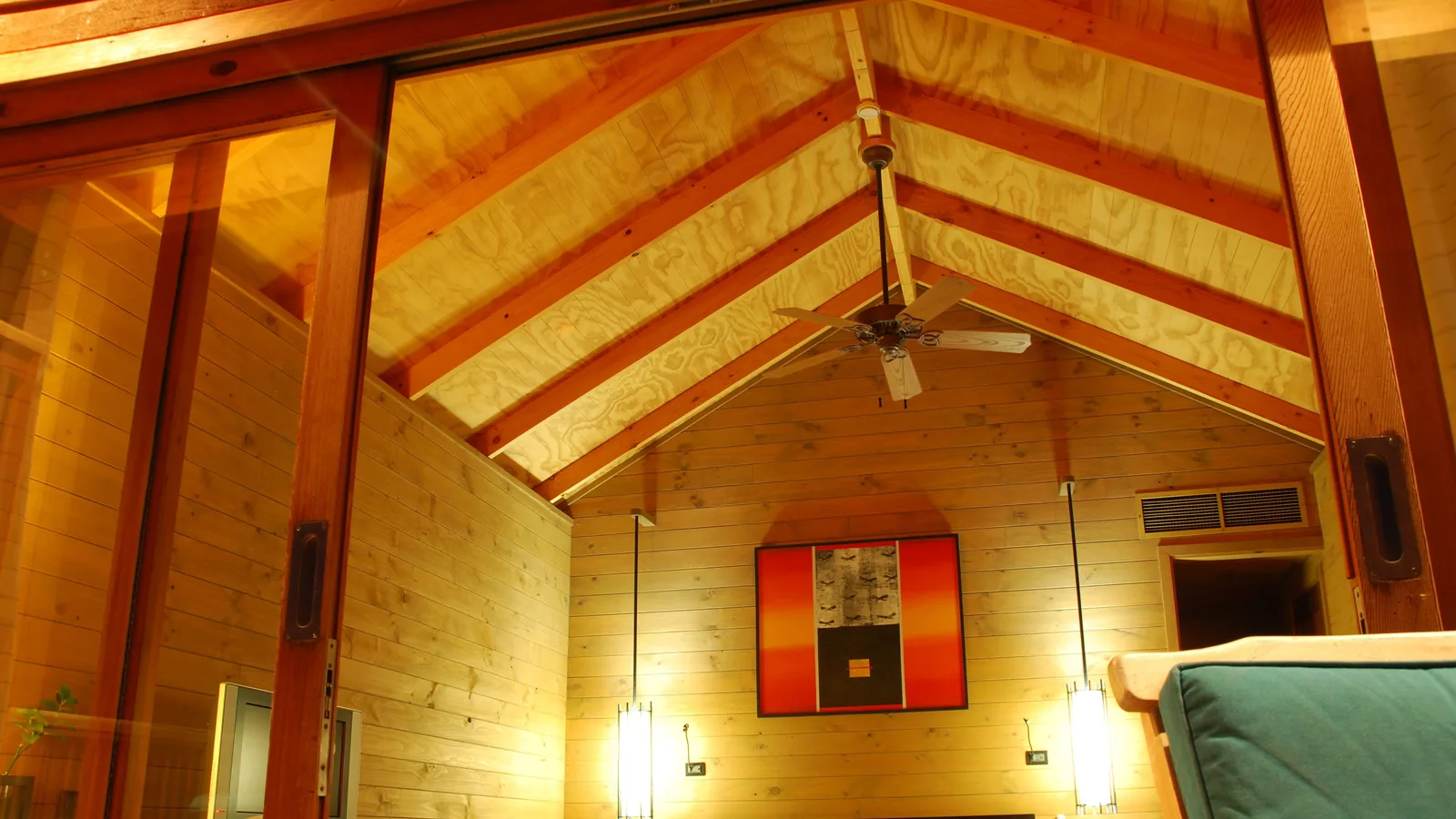
The short answer: style the room in a fixed order
Styling a bedroom is mostly a sequence, not a shopping trip. Clear the surfaces first, then fix a palette, then layer the bed, then plan the lighting, and only after that put anything on the walls. Each decision narrows the next, so you stop guessing and stop buying things that don't fit the room.
- Clear everything off the bedside tables, the chest of drawers and the windowsill before you judge the room.
- Colour comes next: one dominant tone, one supporting tone, one small accent.
- The bed is the focal point and should be the most layered thing in the room.
- Light in three layers — ambient, bedside task, and one small accent.
- Walls and floor last, so art and rugs sit inside a scheme instead of fighting it.
What to have ready before you start
You need less than you think. The aim of the preparation is to make decisions measurable, so you are not guessing at scale or colour in a shop.
- Tape measure
- Bed wall width, window width, and the clear floor at the foot and on each side of the bed.
- Paint chips and a fabric sample
- Two or three colours at most, held against the wall in daylight and again under the bedside lamp.
- Masking tape
- For marking furniture footprints on the floor and the outline of a mirror or picture on the wall.
- Bulb notes
- Colour temperature and wattage for every fitting, so replacements match and stay within the fitting's limit.
- Two bags or boxes
- One for the charity shop, one for storage elsewhere. Nothing returns to the bedroom unless it has a job.
- An afternoon, plus drying time
- A styling reset fits into one afternoon; painting adds a day between coats.
How to style a bedroom in 6 steps
Clear every surface and photograph the room from the doorway
Take everything off the bedside tables, the top of the chest of drawers and the windowsill, and put it on the bed. Bin the rubbish, bag the charity-shop pile, and put back only what you have used in the past week. Then photograph the room from the doorway — the picture shows the proportions and the light far better than standing inside the room does.
Decide what the room has to do
Sleeping only, or sleeping plus reading, dressing, working, exercising? Anything that doesn't serve that job leaves the room. If a desk has to stay, plan it now so it sits on the wall you see least from the bed and can be cleared in one movement at night.
Fix a palette of three before you buy anything
Choose a dominant tone for walls and large textiles (roughly 60% of what you see), a supporting tone for the bed and curtains (about 30%), and one accent for the small things (10%). Wood, brass, black metal and white behave as neutrals, so they don't use up your three.
Place the furniture once, using measurements
Centre the bed on the widest unbroken wall and keep at least 60cm of clear floor at the foot and on the open side so you can walk past without turning sideways. A bedside table whose top sits roughly level with the mattress looks right and puts a lamp at reading height. Tape the footprint of anything you plan to move before you lift it.
Layer the bed from the mattress up
Fitted sheet pulled tight, duvet shaken out with the top third folded back, then a throw across the foot third only — not over the whole bed. Stand two sleeping pillows per person upright against the headboard, add two smaller cushions in front, and stop there. The bed should look generous, not decorated.
Add three layers of light, then dress the walls
Ambient light from a ceiling fitting or a corner floor lamp, task light at each side of the bed, and one accent — a small lamp on the chest, a picture light or a shelf light. Warm white bulbs (around 2700K), dimmed if the fitting allows. Then hang art with its centre about 145cm from the floor and the bottom edge 15–25cm above the headboard, and take the curtain pole up towards the ceiling line if the window is small.
Choose a palette you can live with
The 60/30/10 split is the easiest way to keep a bedroom calm: most of what you see is the wall and floor tone, a third is the bed and curtains, and a tenth is the accent you actually notice. Break the rule only with texture — a bouclé cushion, a ribbed throw, a linen headboard in a similar tone — never with a fourth colour.
Light direction changes how a colour behaves. North- and east-facing rooms get cool, flat light, so warm neutrals (oatmeal, soft clay, warm grey) stop them looking grey; south- and west-facing rooms take deeper or cooler colours because the light itself is warm and strong.
Also decide early whether the metal in the room is brass, black or chrome, and keep it to one. Two metals plus a wood is the point where a scheme starts to look accidental.
Three schemes that work in most UK bedrooms
| Scheme | Colours | Textiles | Lighting |
|---|---|---|---|
| Warm minimal | Chalk white walls, oatmeal, one soft clay accent | Linen-blend bedding, plain wool throw, no pattern | Warm white bulbs, one slim lamp each side, dimmer if possible |
| Modern Scandi | Soft white, pale oak, a mid-blue accent | Crisp cotton bedding, ribbed throw, one geometric cushion | Matte black or white fittings, warm white bulbs, paper or fabric shade |
| Quiet traditional | Off-white or sage walls, dusty rose or brass accents | Cotton percale bedding, quilted bedspread, patterned cushions | Brass or ceramic lamps with linen shades, wall lights where space is tight |
Layer the bed so it looks made, not staged
Work upwards and stop while it still looks like somewhere to sleep. A useful order:
- Base: fitted sheet pulled tight enough that the corners stay put, with no loose folds across the mattress.
- Middle: the duvet, shaken out so it falls evenly on both sides. If one side faces a wall, tuck that side under so the visible side drapes.
- Top: a throw folded in three and laid across the foot third. It should add weight and texture, not another pattern.
- Pillows: sleeping pillows upright against the headboard, then a smaller pair in front, then one accent cushion if you want one.
- Finish: fold the top of the duvet back over the pillows by about 20cm so the sheet edge shows and the bed reads as turned down.
- Standard pillow
- 48 × 74 cm — the two-per-person workhorse.
- Square pillow
- 65 × 65 cm — good as the back row on a double or king bed.
- King pillow
- 50 × 90 cm — fills the width of a king bed better than two standards.
- Double duvet
- 200 × 200 cm
- King duvet
- 230 × 220 cm
- Super king duvet
- 260 × 220 cm
Light it in three layers
One bright ceiling light is what makes a styled bedroom look like a box room at night. Three layers fix it:
- Ambient: a ceiling pendant, a pair of wall lights, or a floor lamp in a corner. This is the light you turn on when you walk in.
- Task: a reading light each side of the bed. The shade wants to sit at about shoulder height when you are propped up, so it lights the page rather than the ceiling.
- Accent: the low, small light you leave on — a lamp on a chest of drawers, a picture light, or a warm strip behind the headboard.
Bulb choice matters more than the fitting. Warm white, around 2700K, reads as evening light; anything above 3000K looks like an office and turns pale walls grey. Check the maximum wattage printed on the fitting before you change a bulb, and put the bedside switch somewhere a hand can reach while lying down.
Dress the walls and the floor
Two measurements do most of the work here.
Art. Centre the picture about 145cm from the floor, or 15–25cm above the headboard if it hangs over the bed. A piece over a double bed wants to be roughly two-thirds the width of the bed so it doesn't look lost. In a group, leave 5–8cm between frames so they read as one piece rather than a scatter.
Curtains. Fix the pole 10–15cm above the window head and 15–20cm wider than the window on each side, so the fabric sits over wall when the curtains are open instead of covering the glass. Roughly double the window width in fabric gives proper folds.
Rug. Run it at least 60cm past each side of the bed, or tuck two-thirds of it under the bed with the bedside tables standing on it. A small rug floating in the middle of the floor makes a room feel smaller, not cosier.
Keep it styled: the one-job rule
Give every horizontal surface a single job and defend it. Bedside table: lamp, one book, one glass. Top of the chest: one tray for the everyday things, nothing loose. Windowsill: one plant or nothing, and never blocking a radiator.
Make the bed every morning — it does more for how the room looks than any single purchase — and do a five-minute reset once a week: straighten the throw, plump the cushions, put away the clothes that have drifted onto the chair. If you can see into the wardrobe from the bed, match the hangers and keep the clothes you actually wear at eye level, with the rest stored higher or lower.
What usually goes wrong — and the quick fix
- Too many small things. A dozen tiny ornaments in three frame sizes. Group in odd numbers, pick one scale, and remove half.
- Everything matches. Bedding, curtains, cushions and rug from one set reads as a showroom. Break the set with one plain texture and one accent.
- Art hung too high, with the top of the frame at standing eye level. Bring the centre down to about 145cm.
- Cool white bulbs throughout. Change to warm white around 2700K before you change any furniture; it is the cheapest visible improvement in the room.
- The palette drifting. Once a fourth colour creeps in on a cushion or a throw, the scheme starts to look accidental.
- No bedside surface at all. A lamp on the floor, a phone on the windowsill. Fit a slim shelf at mattress height and the room immediately behaves better.
Why a deep colour works
- Makes a large, bright bedroom feel cocooning, especially with the ceiling and skirting in the same tone
- Matt deep tones hide uneven plaster and old marks better than pale paint
- Bedding and art read as calmer against a deeper background
What to watch for
- Shows dust and fluff quickly, so it needs a weekly wipe
- Usually needs two or three coats over a pale base, which means more time and more paint
- Can close in a small room with one window unless the lighting is properly layered
Safety details that are easy to miss
Styling a bedroom involves things on walls, things with flexes and things that get hot, so a few checks matter more than the look.
- Fix heavy mirrors and large frames properly. Over a bed, use a fixing suited to that wall — masonry plug, stud or the correct plasterboard anchor — and add a safety strap. Never hang a heavy frame on a hook rated for a picture.
- Keep candles off bedside tables. A solid, stable surface away from curtains, bedding and flexes, and never left burning as you fall asleep.
- Watch the flexes. Trailing extension leads beside a bed get stood on in the dark; route cables along the skirting and keep them out of the walkway.
- Check the wattage on every shade before you fit a bulb, and don't wrap a shade in fabric.
- Keep blind and curtain cords short and cleated well out of reach of children, and fit anti-tip straps to wardrobes and chests of drawers.
- Don't block vents, radiators or air bricks with furniture, curtains or a propped-up headboard.
Bedroom styling questions
Can I restyle a bedroom without buying anything?
Should the ceiling and skirting be the same colour as the walls?
How long should curtains be in a bedroom?
How do I style a bedroom with no space for bedside tables?
What if the bedroom has to double as a workspace?
Related articles

How to choose a couch: get the right sofa first time
Measure the room, test the frame and fill, and match the size to your space before you buy — a practical UK guide to choosing a couch you'll keep.

How to choose a mattress: sleep better every night
A practical UK guide to picking a mattress: match firmness to your sleeping position, check sizes against your bed frame, and know when to replace it.
How to clean garden furniture: a season-long refresh
A practical, material-by-material guide to cleaning garden furniture, from teak and metal to rattan and cushions, with drying, mould and storage advice.

How to decorate a sofa: layer cushions, throws and trays
A practical guide to decorating a sofa: measuring up, layering cushions, draping a throw and fixing the mistakes that make a living room look flat.
How to layer bedding in 6 steps for a hotel finish
Layer bedding the way hotels do: mattress protector, sheets, duvet and throws in the right order, with the right tog for every season.

How to layout furniture in a living room: 6 clear steps
Measure the room, pick the focal point and place the sofa first. A practical, step-by-step guide to laying out living room furniture that works.
How to organise kitchen cupboards: a calmer, faster kitchen
A cupboard-by-cupboard plan: empty, sort, zone, measure and refill so you can see everything and reach it — plus the mistakes that undo the work.